“صراع الإرادات” في جنوب اليمن: موازين النفوذ ورهانات السيادة
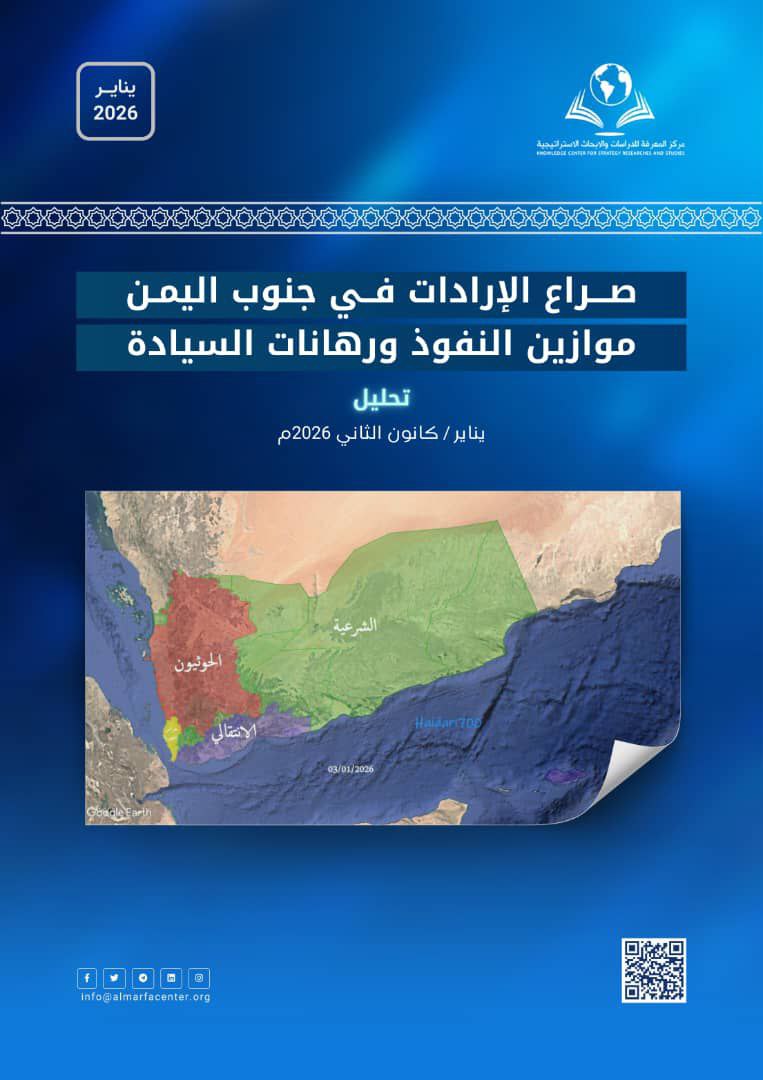
"صراع الإرادات" في جنوب اليمن: موازين النفوذ ورهانات السيادة
تحليل
وحدة الشؤون السياسية
| عبد الله الشادلي
يمرُّ جنوب اليمن بمرحلة شديدة التعقيد في مساره السياسي والعسكري، في وقت لم يعد فيه المشهد مقتصراً على الصراع التقليدي مع جماعة الحوثيين، بل تحوّل إلى ساحة مفتوحة لتقاطع الأجندات الإقليمية وتنافس مشاريع النفوذ.
ويبدو أن التطورات الأخيرة في وادي حضرموت ومحافظة المهرة عكست انتقال الصراع من مستواه المحلي إلى مستوى أوسع، تحكمه حسابات "المجال الحيوي" والأمن الإقليمي، لا سيما في ظل التباينات المتزايدة بين الرياض وأبوظبي حول مستقبل الجنوب وحدود النفوذ فيه.
وبحسب قراءات سياسية للأحداث، فإن التحركات العسكرية والضربات الجوية التي شهدتها بعض مناطق الجنوب لا يمكن فصلها عن هذا السياق الأوسع، حيث تتقاطع تطلعات القوى الجنوبية الساعية إلى استعادة الدولة مع اعتبارات الأمن القومي السعودي، الذي ينظر إلى الجنوب باعتباره عمقاً استراتيجياً لا يمكن تركه خارج معادلات الضبط الإقليمي.
ويبرز في هذا الإطار سؤال محوري حول قدرة الفاعلين الجنوبيين على المناورة ضمن مساحة سياسية وأمنية ضيقة، تتشابك فيها الحسابات المحلية مع خطوط حمراء إقليمية صارمة.
رسائل القوة وحدود المناورة
يرى المراقبون للشأن اليمني أن التدخل الجوي الأخير، الذي استهدف تحركات لقوات جنوبية في مناطق حساسة، لا يعكس بالضرورة تحولاً في طبيعة العلاقة بين الرياض وهذه القوات، التي لعبت دوراً مهماً في تأمين الحدود الجنوبية للمملكة في مواجهة الحوثيين.
غير أن هذه الضربات تُقرأ، وفق محللين، بوصفها رسالة سياسية وعسكرية تهدف إلى "ضبط الإيقاع" ومنع فرض وقائع ميدانية جديدة دون تنسيق مسبق مع المملكة.
وتشير تقديرات سياسية إلى أن الرياض باتت أكثر حساسية تجاه تنامي النفوذ الإماراتي في الجنوب عبر حلفائها المحليين، وترى في بعض التحركات الميدانية محاولة لتكريس أمر واقع في مناطق تعتبرها المملكة امتداداً مباشراً لأمنها الجغرافي.
وفي هذا السياق، يرى المحللون للشأن اليمني أن جنوب اليمن تحول إلى "مختبر إقليمي" ستُرسم على أساسه ملامح التوازنات المقبلة في المنطقة، مع رهان سعودي واضح على إعادة هندسة موازين القوى بما يضمن بقاء القرار الأمني النهائي ضمن نطاق نفوذها.
حضرموت والخطوط الحمراء
تمثل محافظة حضرموت، ولا سيما مناطق الوادي والصحراء، إحدى أبرز النقاط الحساسة في العقيدة الأمنية السعودية. على اعتبار أن الضربات الجوية التي شهدتها بعض المواقع لم تكن تهدف إلى إضعاف القوات الجنوبية بوصفها شريكاً عسكرياً، بل جاءت رداً على تحركات اعتُبرت تجاوزاً لخطوط حمراء تتعلق بالاقتراب من مناطق ذات حساسية سيادية بالنسبة للمملكة.
وترى الرياض، استنادًا إلى المعطيات الأخيرة، أن أي انتشار عسكري أو إعادة تموضع في حضرموت والمهرة يجب أن يتم عبر قنوات تنسيق مباشرة مع. المملكة، التي تخوض صراعًا مفتوحًا مع الحوثيين على حدودها الجنوبية، لا تبدو مستعدة للقبول بوجود قوى مسلحة مدعومة من أطراف إقليمية أخرى على تماس مباشر مع هذه الحدود، حتى وإن كانت تُصنف ضمن معسكر الحلفاء.
ويرتبط هذا الموقف السعودي برؤية أوسع لمستقبل التسوية في اليمن، حيث ترفض المملكة، وفق تقديرات سياسية، القبول بأي مسار يؤدي إلى انفصال الجنوب قبل معالجة الملف الحوثي أو التوصل إلى تسوية سياسية شاملة. وتستند الاستراتيجية السعودية إلى ما تصفه بمبدأ "التسلسل المنطقي"، الذي يربط بين إنهاء التهديد الحوثي، أو الوصول إلى اتفاق سياسي جامع، وبين إعادة ترتيب شكل الدولة اليمنية.
في هذا السياق، تبرز حضرموت كعنصر محوري في حسابات الرياض. فالمملكة تمتلك علاقات تاريخية وقبلية ممتدة مع مكونات حضرمية، ما يعزز من حضورها السياسي والاجتماعي في المحافظة. ويُنظر إلى هذا الحضور بوصفه عاملاً يسمح للرياض بالتأكيد على أن حضرموت لا ينبغي أن تكون خاضعة لقرار مركزي صادر من عدن.
وتُظهر المعطيات الأخيرة أن الرياض تطرح سيناريوهات متعددة لمستقبل حضرموت، تتراوح بين دعمها كإقليم مستقل في حال مضي الجنوب نحو الانفصال، أو كإقليم اتحادي قوي في حال بقاء الدولة موحدة.
ويهدف هذا التوجه إلى خلق توازن داخلي في الجنوب يمنع انفراد أي طرف بالقرار، ويضمن استقرار النفوذ السعودي في المحافظة الأكبر مساحة والأغنى بالموارد.
كما تشير المعطيات إلى أن السعودية لا تعارض تطلعات الجنوبيين بشكل كامل، لكنها تتحفظ على أي نموذج للدولة قد يؤدي إلى خروج الجنوب عن المدار الاستراتيجي للمملكة أو تحوله إلى ساحة نفوذ مطلقة لقوى إقليمية أخرى. ومن هذا المنطلق، تسعى الرياض إلى صياغة معادلة توازن دقيقة تضمن مصالحها الأمنية دون الدخول في مواجهة مباشرة مع الحلفاء المحليين.
الاشتباك الإقليمي
لا يقتصر التوتر السعودي-الإماراتي في اليمن على حدوده الجغرافية، بل يمتد إلى صراعات أوسع على النفوذ في ملفات إقليمية أخرى. كما أسهم التباين بين البلدين في ساحات مثل السودان، حيث يدعم كل طرف قوى مختلفة، في تعميق فجوة الثقة بينهما، وانعكس ذلك على شكل إدارة الملف اليمني.
كما تتحدث قراءات سياسية عن خلافات صامتة تتعلق بملفات اقتصادية ونفطية وحدودية، ما زاد من حساسية كل طرف تجاه تحركات الآخر في مناطق النفوذ المشتركة. ومن هنا، يمكن القول إن التحرك السعودي الأخير في حضرموت يعكس رغبة واضحة في إعادة الإمساك بخيوط الملف الجنوبي في اليمن، والتأكيد على أن أي ترتيبات أمنية أو سياسية لا يمكن أن تتم بمعزل عن موافقة الرياض.
يضاف إلى ذلك، أن القوى المحلية في الجنوب باتت، إلى حد كبير، جزءاً من هذا الاشتباك الإقليمي الأوسع، حيث تُستخدم أحياناً كورقة ضغط متبادلة في صراع نفوذ يتجاوز الحدود اليمنية.
حرب المنافذ
خلافاً للتفسيرات التي تركز على الصراع حول الموارد الطبيعية، يرى محللون أن جوهر التنافس يتمحور حول السيطرة على المنافذ البرية والممرات المائية. فالسعودية، التي تعتمد بشكل كبير على استقرار طرق التجارة والطاقة، تسعى إلى تأمين منفذ استراتيجي على بحر العرب والمحيط الهندي عبر حضرموت والمهرة، تحسباً لأي تصعيد قد يهدد الملاحة في مضيق هرمز.
في المقابل، تعمل الإمارات على تعزيز حضورها البحري واللوجستي من خلال شبكة من الموانئ والمواقع الاستراتيجية الممتدة من عدن إلى سقطرى، وصولاً إلى القرن الأفريقي. ويُنظر إلى هذا التنافس على أنه صراع بين رؤيتين: الأولى سعودية تركز على النفوذ الجيوسياسي والأمن القومي، والثانية إماراتية تركز على النفوذ التجاري والبحري.
اختفاء الزبيدي ومسار الرياض
يمثل رئيس المجلس الانتقالي الجنوبي، عيدروس الزبيدي، نقطة تقاطع حساسة في معادلة النفوذ الجنوبي والإقليمي. وتنظر الرياض إلى الزبيدي بوصفه قريباً من الأجندة الإماراتية، وهو ما أدى إلى توتر العلاقة مؤخراً، خصوصاً مع ما وُصف بمحاولات لتجاوز التفاهمات السعودية في مناطق حساسة بالوادي والمهرة.
كما أن تراجع حضوره في المشهد السياسي، إلى جانب تصاعد الخطاب الإعلامي ضده، يعكس حالة من الفتور وربما إعادة تقييم العلاقة من جانب الرياض، رغم أن الزبيدي لا يزال يمتلك ثقلاً سياسياً وعسكرياً يجعل احتمال حدوث قطيعة كاملة مستبعداً على المدى القريب.
في ظل هذا الواقع، يشكل اللقاء التشاوري الجنوبي الذي استضافته الرياض خطوة استراتيجية تهدف إلى إعادة صياغة العلاقة مع القضية الجنوبية ضمن إطار أكثر شمولاً. ومن منظور الجنوبيين في الداخل، فإن رفع العلم الجنوبي وعزف نشيده في العاصمة السعودية يحمل دلالات رمزية، تهدف إلى طمأنة الشارع الجنوبي واحتواء المطالب ضمن مظلة سعودية.
ويهدف هذا المسار إلى توسيع دائرة التمثيل الجنوبي وكسر احتكار أي طرف واحد للقضية، بما يمنح الرياض هامشاً أوسع لإدارة الملف الجنوبي بما يتوافق مع مصالحها الإقليمية، بما في ذلك إعادة النظر في الصيغ السياسية القائمة، إذا ما رأت أنها أكثر انسجاماً مع اعتبارات الاستقرار والأمن الإقليمي.
ورغم ما تحمله هذه الخطوة من دلالات سياسية، يبقى نجاح المسار مرهوناً بقدرة الأطراف الجنوبية على التوصل إلى رؤية مشتركة، وبمدى استعداد القوى الإقليمية لتقديم تنازلات متبادلة تسهم في تحقيق استقرار طويل الأمد.
الثلاثاء الموافق 20 يناير/كانون الثاني 2026م
A Struggle of Wills” in Southern Yemen: Balances of Influence and the Stakes of Sovereignty
Analysis
Political Affairs Unit
Abdullah Al-Shadali
Southern Yemen is undergoing an exceptionally complex phase in its political and military trajectory at a time when the landscape is no longer confined to the traditional conflict with the Houthi movement . Rather it has evolved into an open arena for the intersection of regional agendas and the competition of influence-driven projects .
Recent developments in Wadi Hadramawt and Al-Mahrah Governorate appear to reflect a shift in the nature of the conflict from a local level to a broader one governed by calculations related to “vital space” and regional security . This is particularly evident in light of the growing divergences between Riyadh and Abu Dhabi regarding the future of the South and the boundaries of influence within it .
According to political readings of the unfolding events the military movements and airstrikes witnessed in parts of southern Yemen cannot be separated from this broader context . These dynamics represent an intersection between the aspirations of southern forces seeking to restore statehood and Saudi national security considerations which view the South as a strategic depth that cannot be excluded from regional security and control equations .
Within this context a central question emerges regarding the ability of southern actors to maneuver within a narrow political and security space where local calculations intersect with rigid regional red lines .
Signals of Power and the Limits of Maneuverability
Observers of Yemeni affairs argue that the recent aerial intervention which targeted movements of southern forces in sensitive areas does not necessarily indicate a shift in the nature of the relationship between Riyadh and these forces. The latter have played a significant role in securing the Kingdom’s southern borders against the Houthis.
However according to analysts these strikes are best understood as political and military message aimed a “regulating the tempo” and preventing the imposition of new facts on the ground without prior coordination with the Kingdom.
Political assessments further suggest that Riyadh has become increasingly sensitive to the expansion of Emirati influence in the South through its local allies. From the Saudi perspective certain field movements are viewed as attempts to consolidate a fait accompli in areas considered a direct extension of the Kingdom’s geographic security.
In this regard, analysts of Yemeni affairs contend that southern Yemen has effectively turned into a “regional laboratory” upon which the contours of future regional balances will be drawn. This comes amid a clear Saudi wager on reengineering the balance of power in a manner that ensures the final security decision remains within its sphere of influence.
Hadramawt and the Red Lines
Hadramawt Governorate—particularly the Wadi and Desert regions—constitutes one of the most sensitive points within Saudi Arabia’s security doctrine. The airstrikes that targeted certain locations were not intended to weaken southern forces as a military partner rather they came in response to movements perceived as crossing red lines related to proximity to areas of sovereign sensitivity for the Kingdom.
Based on recent developments Riyadh maintains that any military deployment or redeployment in Hadramawt and Al-Mahrah must take place through direct coordination channels with the Kingdom. As Saudi Arabia remains engaged in an open conflict with the Houthis along its southern borders it appears unwilling to accept the presence of armed forces backed by other regional actors in direct contact with these borders—even if such forces are formally classified within the camp of allies.
This Saudi position is linked to a broader vision regarding the future of a political settlement in Yemen. According to political assessments the Kingdom rejects any trajectory that could lead to southern secession prior to addressing the Houthi file or reaching a comprehensive political settlement. Saudi strategy is grounded in what it describes as a principle of “logical sequencing” which ties the neutralization of the Houthi threat or the achievement of an inclusive political agreement to the subsequent reconfiguration of the Yemeni state.
Within this framework, Hadramawt emerges as a pivotal element in Riyadh’s strategic calculations. The Kingdom maintains longstanding historical and tribal ties with Hadrami constituencies reinforcing its political and social presence in the governorate. This presence is viewed as a factor that enables Riyadh to assert that Hadramawt should not be subject to a centralized decision emanating from Aden.
Recent indicators suggest that Riyadh is advancing multiple scenarios for Hadramawt’s future, ranging from supporting it as an independent region should the South move toward secession to endorsing it as a strong federal region in the event that the Yemeni state remains unified. This approach aims to create an internal balance in the South that prevents any single actor from monopolizing decision-making while ensuring the stability of Saudi influence in the largest and most resource-rich governorate.
The available data also indicate that Saudi Arabia does not wholly oppose southern aspirations rather it expresses reservations toward any state model that could lead to the South’s departure from the Kingdom’s strategic orbit or its transformation into an arena of exclusive influence for other regional powers. On this basis Riyadh seeks to craft a delicate balance formula that safeguards its security interests without entering into direct confrontation with local allies.
Regional Entanglement
Saudi–Emirati tensions in Yemen are not confined to their geographic boundaries but extend into broader struggles over influence across other regional files. Divergences between the two countries in arenas such as Sudan—where each supports different actors—have contributed to widening the trust gap between them a dynamic that has been reflected in the management of the Yemeni file.
Political readings also point to latent disagreements related to economic, oil, and border issues, further heightening each side’s sensitivity to the other’s movements within shared zones of influence. From this perspective the recent Saudi move in Hadramawt can be understood as a clear effort to reassert control over the southern Yemeni file and to underscore that any security or political arrangements cannot be undertaken without Riyadh’s consent.
Moreover, local actors in the South have increasingly become integral components of this broader regional entanglement at times being employed as instruments of reciprocal pressure within a struggle for influence that extends beyond Yemen’s borders.
The Battle over Gateways
Contrary to interpretations that emphasize competition over natural resources, analysts argue that the core of the rivalry revolves around control over land crossings and maritime corridors. Saudi Arabia which relies heavily on the stability of trade and energy routes seeks to secure a strategic outlet to the Arabian Sea and the Indian Ocean via Hadramawt and Al-Mahrah as a contingency against any escalation that could threaten navigation through the Strait of Hormuz.
In contrast the United Arab Emirates has been working to consolidate its maritime and logistical presence through a network of ports and strategic sites extending from Aden to Socotra and onward to the Horn of Africa. This competition is widely viewed as a clash between two distinct visions: a Saudi approach centered on geopolitical influence and national security and an Emirati approach focused on commercial and maritime leverage.
Al-Zubaidi’s Absence and Riyadh’s Trajectory
The President of the Southern Transitional Council Aidrous Al-Zubaidi represents a sensitive intersection point in the equation of southern and regional influence. Riyadh views Al-Zubaidi as closely aligned with the Emirati agenda a perception that has contributed to recent strains in the relationship—particularly amid what have been described as attempts to bypass Saudi understandings in sensitive areas of the Wadi and Al-Mahrah.
Furthermore the decline of his visibility within the political landscape coupled with the escalation of media rhetoric directed against him reflects a state of cooling and perhaps a reassessment of the relationship on Riyadh’s part. Nevertheless Al-Zubaidi continues to command political and military weight, rendering the prospect of a complete rupture unlikely in the near term.
Within this context the Southern Consultative Meeting hosted by Riyadh constitutes a strategic step aimed at redefining the relationship with the southern issue within a more inclusive framework. From the perspective of southern actors on the ground the raising of the southern flag and the playing of its anthem in the Saudi capital carry symbolic connotations intended to reassure the southern street and to contain demands under a Saudi-sponsored umbrella.
This trajectory seeks to broaden the circle of southern representation and to break any single actor’s monopoly over the issue thereby granting Riyadh greater latitude in managing the southern file in a manner consistent with its regional interests. This includes the possibility of revisiting existing political formulas should they be deemed more compatible with considerations of stability and regional security.
Despite the political significance of this step, the success of this pathway remains contingent upon the ability of southern actors to arrive at a shared vision as well as the willingness of regional powers to offer reciprocal concessions that contribute to the achievement of long-term stability.
Tuesday, 20 January 2026
